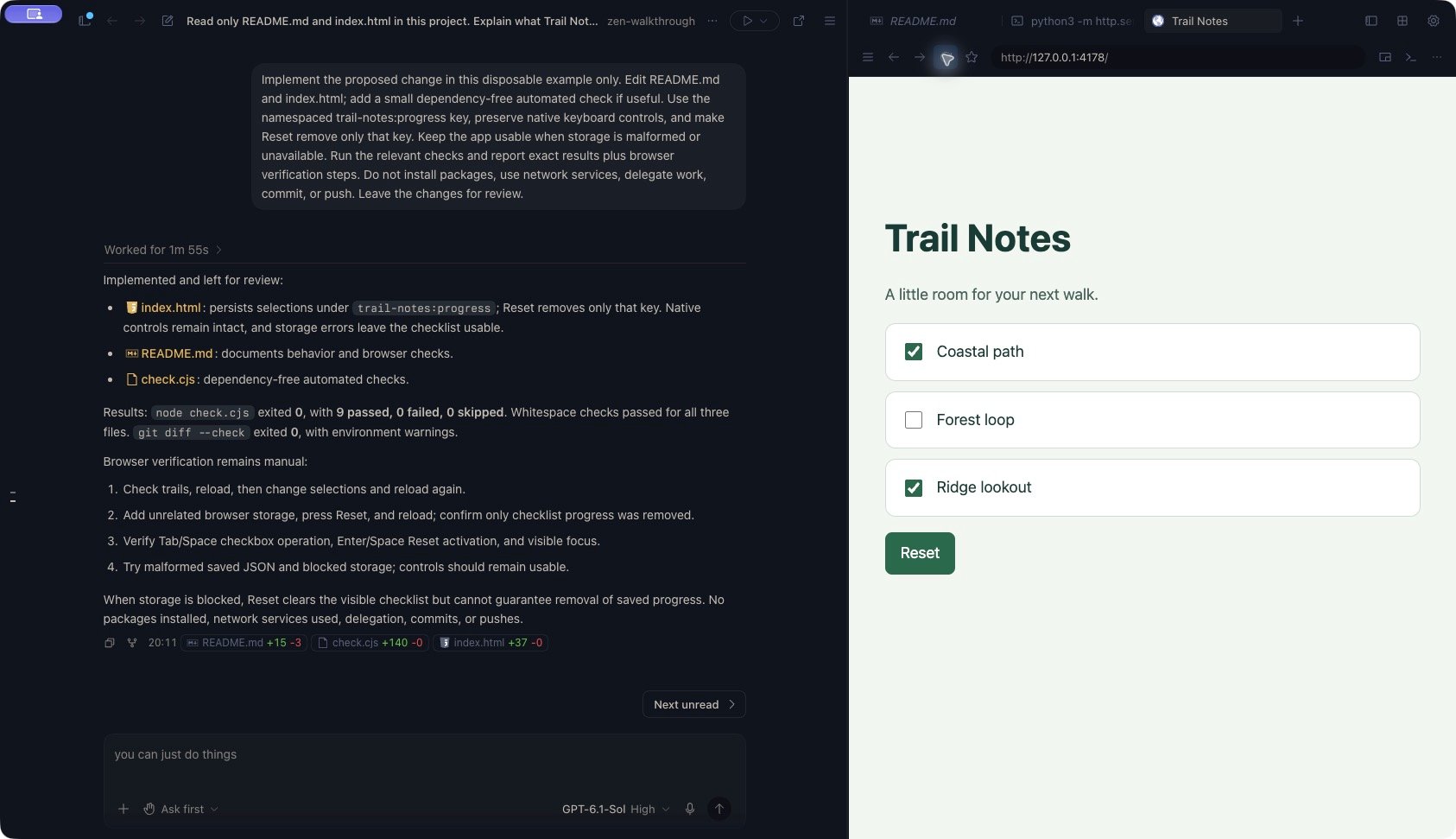
An implementation ready for review in Zen, beside the running Trail Notes preview. The conversation, project files, terminal, and browser remain in one workspace.
Install and set up Kisuke
Choose the right desktop download, then sign in, set up Connect, and connect a provider.
Start with Zen mode
Learn the workspace, bring tools beside your chat, and choose your default layout.
Choose your models
Understand providers, harnesses, model selection, and reasoning controls.
Connect a provider
Set up OpenAI, Anthropic, Google, and other integrations offered in Settings.
Open your project
Choose a device and folder, then inspect the workspace before your first prompt.
Plan and review
Ask for a plan, edit it, and decide when implementation should begin.
Work through a change in Zen
New to the workspace? Take a first tour to ask about a project and inspect the answer with Files beside the conversation. Ready to make a change? Follow the implementation walkthrough from an agreed plan through tests, a working preview, and a scoped commit. Keep the conversation and its supporting tools together:- Attach a file or paste reference text and explain the outcome you want.
- Review permissions and ask for a plan before implementation.
- Read and edit files, run commands in Terminal, and preview a running app in Browser.
- Inspect Git changes and stage files. Check the actual result before considering the work finished.
Return to earlier work
Find a conversation by project, status, archive view, or device. Rename and pin chats to make them easier to find, or search older archives in Settings. An offline device or missing working folder can prevent a listed conversation from opening. The history guides explain how to distinguish those conditions from a hidden or archived row. Away from your computer? Pair your phone, keep Connect running on the project computer, and find the existing chat on your phone. Continue after checking its latest exchange and project context.Customize your setup
- Project context: instruction files describe repository conventions; skills package reusable procedures; custom commands save prompts with arguments.
- Tools and integrations: configure MCP servers, inspect plugins, or register a plugin marketplace. Availability depends on the harness and runtime state.
- Your own endpoint: add a custom model when you have an OpenAI-compatible service and its model identifier.